I learned to crochet a long time ago, but I was stalled in really learning how to crochet because my aunt, who taught me, only knew the basics herself. She simply crocheted row on row and didn’t know how to increase, decrease and was really, a beginner herself. We didn’t know anyone who knew the craft, and there wasn’t a lot available since the internet wasn’t even a thing back then. I would sometimes stumble upon pattern books that made no sense to me because I couldn’t read the patterns and there were no guides attached to help you learn to read the patterns.
It’s different today–we have a plethora of information out there about crafting.
I learned all my skills from books and online blogs and by trying my hand at simple patterns and once I got the knack of it (which wasn’t hard at all) I never looked back.
Reading Patterns Isn’t Hard
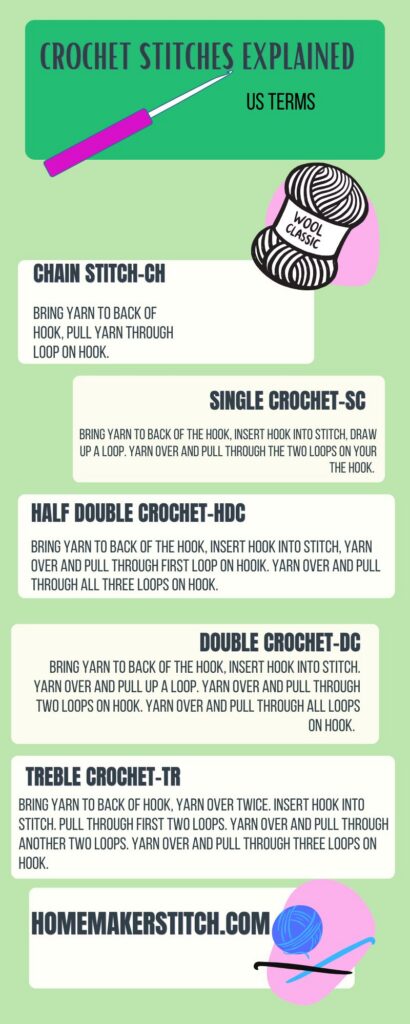
Reading crochet patterns isn’t hard at all. Once you know how to crochet the basic stitches, you are half way on your way to reading all crochet patterns. Crochet patterns are simply instructions–follow the instructions and you can create the item be it a sweater or simple scarf. The catch to reading crochet patterns is that they use short forms for terms. Once you know the names of the stitches and their short forms, the rest is as easy as reading this blog post.
So let’s get started shall we? Check out the infographic for how to crochet each of the basic stitches. I’ve included some instructions for a basic, easy scarf.
Simple pattern to make a scarf:
Row 1: Ch 20. In second ch from hook, hdc. Hdc in ea st (each stitch) will end of row.
Row 2: Turn your work, ch 1. Hdc in ea st still end of row.
Row 3-end: Repeat row 2.
End when the scarf is long enough to reach your hips when draped without folding over your shoulders, or longer if desired.
I hope you’ll try out the above pattern! I made it super simple, for the absolute beginner, in order to teach you how to read the pattern. It’ll produce a scarf, but most crochet patterns are more detailed. They will include yarn weight, hook size, and usually a list of stitches used in the pattern as well as any other pattern notes to help you crochet special stitches or achieve a certain affect.
Notice the Terms in the Pattern
Crochet patterns will specify which terms they are using. What does this mean? Just like American spelling varies from British spelling, crochet terms (short forms) vary from US terms to UK terms. Although the stitches are the same, they refer to different stitches. So a double crochet in US terms is not the same in UK terms. A US double crochet is actually a UK treble crochet.
It’s important to note which terms the pattern writer is using (patterns will specify) because otherwise you’re going to have some interesting results. Some might be useable as a completed item, some might not depending on the intended drape and size.
Suggested for You: How to Crochet the Feather Stitch
This is pretty much everything you need to know to start crocheting. So if you are a beginner who has found it overwhelming, I hope this simple and super basic explanation has helped.
Lots More to Learn
There is more I can share about learning to crochet. For instance, it’s important to learn to read your stitches. Knowing what a chain stitch should look like helps you when you are first learning to crochet, and it’s important to know what the other stitches look like in fabric. Being able to read your stitches helps you more easily locate mistakes and correct them without unraveling all of your work. But while there is a lot more to learn about crochet, it’s also important to note that sometimes it’s worthwhile to just start at the beginning–with basic stitches, with practice and grow from there. My purpose here is to guide you in learning those first steps and then guide you into helpful next steps in your learning journey.
I hope you’ll be back for more.
Follow me on Instagram for more crochet content!